
Record-breaking El Niño: Pacific heat hits new highs before December peak, WMO flags drier outlook for South Asia
In one minute
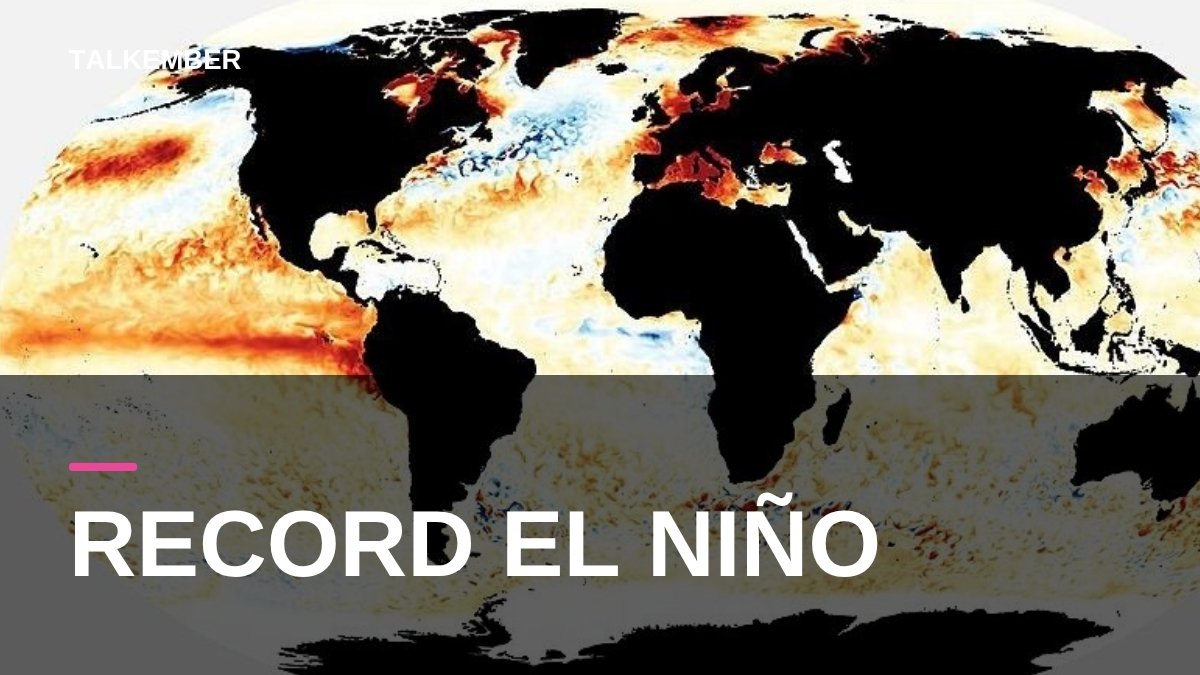
Central Pacific sea temperatures have reached their highest weekly level on record, Australia's Bureau of Meteorology says, weeks before El Niño's expected peak in December. The WMO forecasts the event could be one of the strongest since 1950 and expects drier-than-normal conditions over the Indian subcontinent from October to December.
Key takeaways
- Average weekly sea-surface temperatures in the central Pacific have hit their highest level on record, according to Australia's Bureau of Meteorology (BOM), as reported by BBC Weather on 13 October.
- The El Niño is still strengthening and is expected to peak around December, according to the WMO and forecasts from ECMWF and NOAA.
- The WMO says there is a near-100% chance it lasts through February 2027 and that it could be one of the strongest since at least 1950.
- For October–December, the WMO's update shows drier-than-normal conditions are more likely over the Indian subcontinent.
- Scientists expect the extra ocean heat to help make 2026 one of the warmest years on record, with high temperatures likely into 2027.
What the new numbers show
The WMO's Global Seasonal Climate Update says the Niño 3.4 index — the main measure of El Niño — rose from +1.6°C above normal in June to +2.5°C in August. For October–December it is forecast to average about +3.7°C, which would be the highest since records began and above the previous record of +2.6°C set in November 2015–January 2016.
| Period | Niño 3.4 anomaly | Note |
|---|---|---|
| June 2026 | +1.6°C | Observed (WMO) |
| August 2026 | +2.5°C | Observed (WMO) |
| Oct–Dec 2026 | about +3.7°C | Forecast (WMO) |
| Nov 2015–Jan 2016 | +2.6°C | Previous record |
BBC Weather reports that temperatures above 30°C have been measured in parts of the tropical Pacific for the first time, and that unusual warmth now stretches well beyond the usual El Niño zone. Climate scientist Zeke Hausfather of Berkeley Earth told the BBC the event is "unprecedented in the historical record".
Is climate change making it stronger?
Not proven. The WMO says there is currently no evidence that climate change is making El Niño events stronger or more frequent, though research continues. What is clear is that El Niño releases stored ocean heat into the atmosphere on top of long-term warming. Because the whole Pacific is warmer than before, US and Australian forecasters now also use a "relative" index to compare events fairly — and by that measure too, BOM data show current levels above December 2015.
What it could mean for Pakistan and India
The WMO stresses that regional effects vary and that its maps are not a replacement for national forecasts. Its October–December outlook shows:
- Drier than normal conditions more likely over the Indian subcontinent.
- A positive Indian Ocean Dipole, which influences rainfall around the Indian Ocean, expected to peak in October and then weaken.
- Above-average temperatures likely across large parts of the globe.
People should follow updates from the Pakistan Meteorological Department and the India Meteorological Department for local forecasts.
Past strong El Niño years
During the 1997–98 event, severe drought in south-east Asia fed huge forest and peat fires while East Africa had damaging floods, the BBC notes. The WMO says drought and flood disruption is already being reported in several regions, with food-security concerns in parts of East Africa and Asia-Pacific.
What to watch
- Monthly updates from the WMO, NOAA and BOM as the event heads toward its December peak.
- Winter rainfall and temperature outlooks from PMD and IMD.
- Global temperature reports confirming whether 2026 ranks among the hottest years.
Sources
- World Meteorological Organization — Sea-surface temperatures reflect strengthening El Niño (Global Seasonal Climate Update)
- BBC Weather — Super El Niño breaks sea temperature record weeks ahead of expected peak
Spotted a mistake? Tell us — we fix errors and log them on our corrections page.
#el-nino#climate#wmo#pacific-ocean#weather#south-asia#global-warming
Comments (0)