
Pakistan Army test-fires extended-range Fatah-2 hypersonic missile; range not disclosed
In one minute
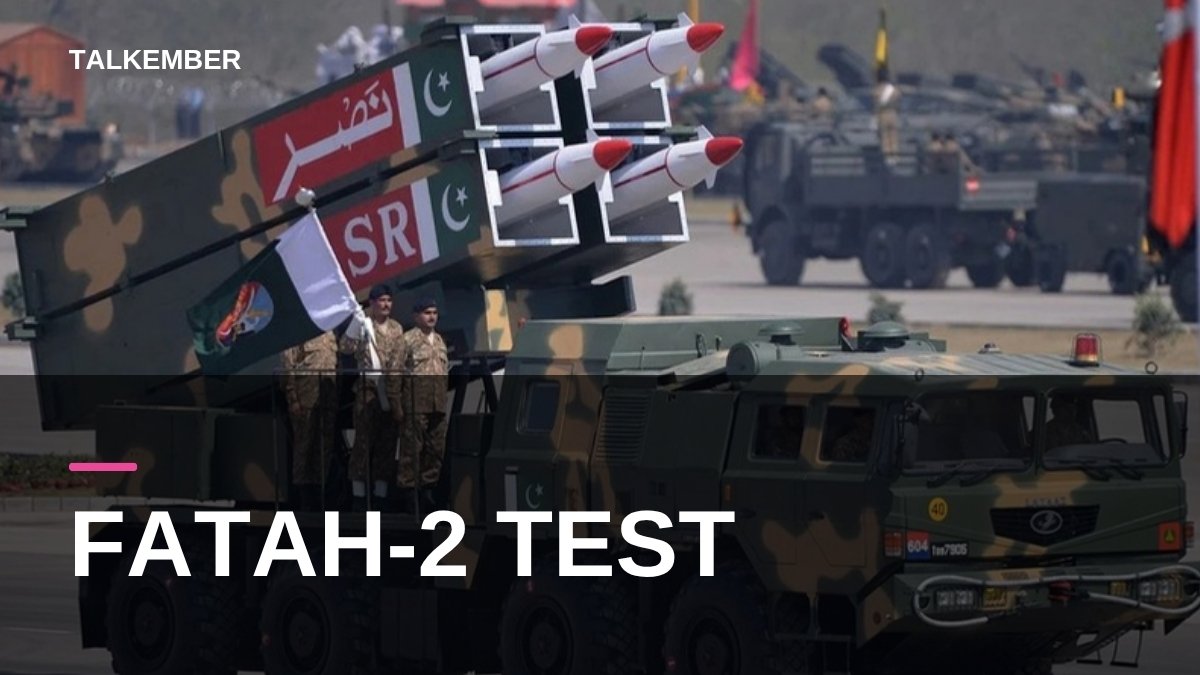
The Pakistan Army said on Tuesday it had successfully test-launched an extended-range version of its Fatah-2 hypersonic ballistic missile. ISPR said the system can defeat missile defences, but it did not give the missile's range. The test came a week after an extended-range Fatah-4 cruise missile launch.
Key takeaways
- The Pakistan Army test-launched an extended-range (ER) version of the Fatah-2 hypersonic ballistic missile on Tuesday, 13 October 2026, according to the military's media wing, ISPR.
- ISPR said the missile has advanced navigation and avionics and can beat enemy missile defences because of its trajectory and manoeuvrability.
- The military did not disclose the missile's range, the test location or the targets used.
- The launch came about a week after an extended-range version of the Fatah-4 ground-launched cruise missile was tested.
- President Asif Ali Zardari, PM Shehbaz Sharif and Field Marshal Asim Munir congratulated the scientists and engineers.
What happened
ISPR said in a statement on Tuesday that the Army had carried out a "successful test launch" of the Fatah-2 ER. According to the statement, as reported by Dawn and The Express Tribune, the weapon can engage targets "with high precision" and its extended range will improve the Army's ability to strike "deep targets".
The launch was watched by the commander of the Army Rocket Force Command (ARFC), senior officers, scientists and engineers. Firstpost, citing Dawn, named the ARFC commander as Lt Gen Nauman Zakaria. ISPR said the commander praised the technical work of the team.
Interior Minister Mohsin Naqvi also congratulated the nation and called the test an important step for the defence sector, Dawn and The Express Tribune reported.
What was not disclosed
The official statement left out several details that analysts usually look for:
| Detail | Disclosed? |
|---|---|
| Missile type | Yes — hypersonic ballistic missile (Fatah-2 ER) |
| Range | No |
| Test site / impact area | No |
| Speed or flight profile data | No |
| Independent assessment | None published |
Firstpost noted that a single successful test does not show how a missile would perform in combat, where reliability, accuracy and the opponent's defences all matter.
Background: the Fatah series and the Rocket Force
- The Fatah missiles are part of Pakistan's locally developed conventional missile programme.
- The Army Rocket Force Command was announced in August 2025 to handle conventional missile forces; nuclear-capable systems stay under the separate National Strategic Command, Arab News reported.
- Arab News linked the build-up to the brief conflict with India in May 2025.
- On 7 October 2026 the Army tested an extended-range Fatah-4 cruise missile, which ISPR said showed improved accuracy. A Fatah-4 training launch in September 2025 was reported at a range of 750 km.
What to watch
- Whether ISPR or the government releases range or performance figures for the Fatah-2 ER.
- Any official comment from neighbouring countries on the back-to-back tests.
- Further launches by the Army Rocket Force Command, which has now tested two extended-range systems in about a week.
Sources
- Dawn — Army conducts successful test launch of hypersonic Fatah-2 extended range missile: ISPR
- The Express Tribune — Pakistan Army successfully test-fires extended-range Fatah-2 hypersonic ballistic missile
- The Express Tribune — Army tests hypersonic Fatah-2 missile
- Arab News Pakistan — Pakistan successfully test-fires Fatah-2 extended-range hypersonic missile
- Firstpost — Pakistan tests extended-range Fatah-2 missile after Fatah-4 launch
Spotted a mistake? Tell us — we fix errors and log them on our corrections page.
#fatah-2#ispr#pakistan-army#missile-test#army-rocket-force-command#defence#pakistan
Comments (0)