
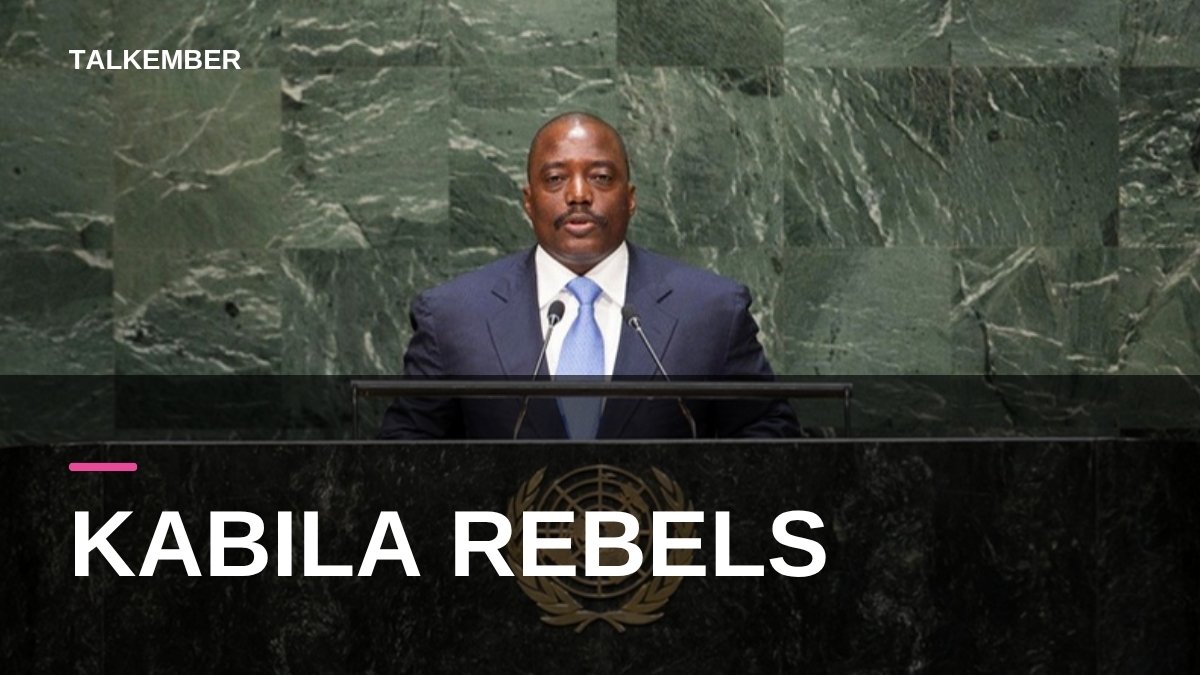
DR Congo: ex-president Joseph Kabila named leader of new rebel front that includes M23 commanders
In one minute
Former DR Congo president Joseph Kabila has been named head of a new coalition, the Front for the Refoundation of the Nation (FRN), whose leadership includes AFC/M23 figures. The group says it wants to end President Tshisekedi's rule "by all means, including force", raising fresh doubts over peace efforts in eastern Congo.
Key takeaways
- Former Democratic Republic of Congo president Joseph Kabila has been named leader of a new rebel coalition, the Front for the Refoundation of the Nation (FRN), announced on Monday, 12 October, in Goma.
- M23 military commander Sultani Makenga is one of his four deputies; the FRN replaces the Congo River Alliance (AFC), which had been allied with M23.
- The FRN says it will pursue its goal of ending what it calls "tyranny" "by all means, including force".
- Kabila, who ruled from 2001 to January 2019, was sentenced to death in absentia by a military court in September 2025 for treason and war crimes. He calls the case political.
- The Congolese government had not commented officially, according to the BBC; a ruling-party official criticised the move.
What happened
The coalition was unveiled at a press conference at Kabila's residence in Goma, the largest city in eastern DR Congo, which M23 has controlled since early 2025. The group's adviser, Claude Ibalanky, said it would bring together opposition "resistance forces". Video released by the group showed Kabila signing documents alongside the other leaders.
According to DW, the leadership also includes former AFC leader Corneille Nangaa and M23 political leader Bertrand Bisimwa.
The BBC describes it as the clearest sign yet of Kabila's direct involvement in an armed movement. He had previously denied links to M23.
What each side says
- Kabila last week accused President Félix Tshisekedi's government of ignoring his proposals to end the eastern conflict, undermining constitutional rule, mismanaging the economy and arresting opponents. The government has not publicly answered those claims.
- Ruling UDPS party official Adolph Amisi Makutano, quoted by DW, called Kabila's move "a disgrace for the DRC" and said he had finally been pushed into the open.
- Rwanda: the UN and Western governments accuse Rwanda of backing M23. Rwanda denies this and says its military presence is defensive.
Background
| Kabila in power | 2001 – January 2019 |
| Kabila–Tshisekedi | Informal power-sharing after 2019, later fell out |
| Exile | Left in 2023, returned to Goma in 2025 |
| Death sentence (in absentia) | 30 September 2025, military court |
| M23 territorial gains | Took Goma and Bukavu in 2025 |
Eastern DR Congo has more than 100 armed groups, and fighting over land, ethnicity and minerals has displaced huge numbers of people. Tshisekedi's second term ends in 2028, but he said in May that elections might not happen because of the conflict, and parliament has passed a bill that could lead to a referendum on removing the two-term limit, the BBC reports.
Why it matters
Analysts quoted by the BBC and DW see the move as an attempt to give the rebellion a bigger national political face. Richard Moncrieff of the International Crisis Group told the BBC that Kabila may hope to attract Congolese army officers and reduce M23's reliance on Rwanda. Analyst Cliffton Chifuwe told DW that peace is still possible but the new alliance "raises the threshold" for a settlement that holds.
What to watch
- An official response from Kinshasa and from Rwanda.
- Whether ongoing diplomatic efforts to end the eastern conflict are disrupted.
- Any new fighting or territorial moves by FRN/M23 forces.
Sources
- BBC News — Joseph Kabila: DR Congo ex-president named leader of new M23 rebel coalition
- DW — Former DRC President Kabila joins new AFC/M23 rebel group
Spotted a mistake? Tell us — we fix errors and log them on our corrections page.
Comments (0)